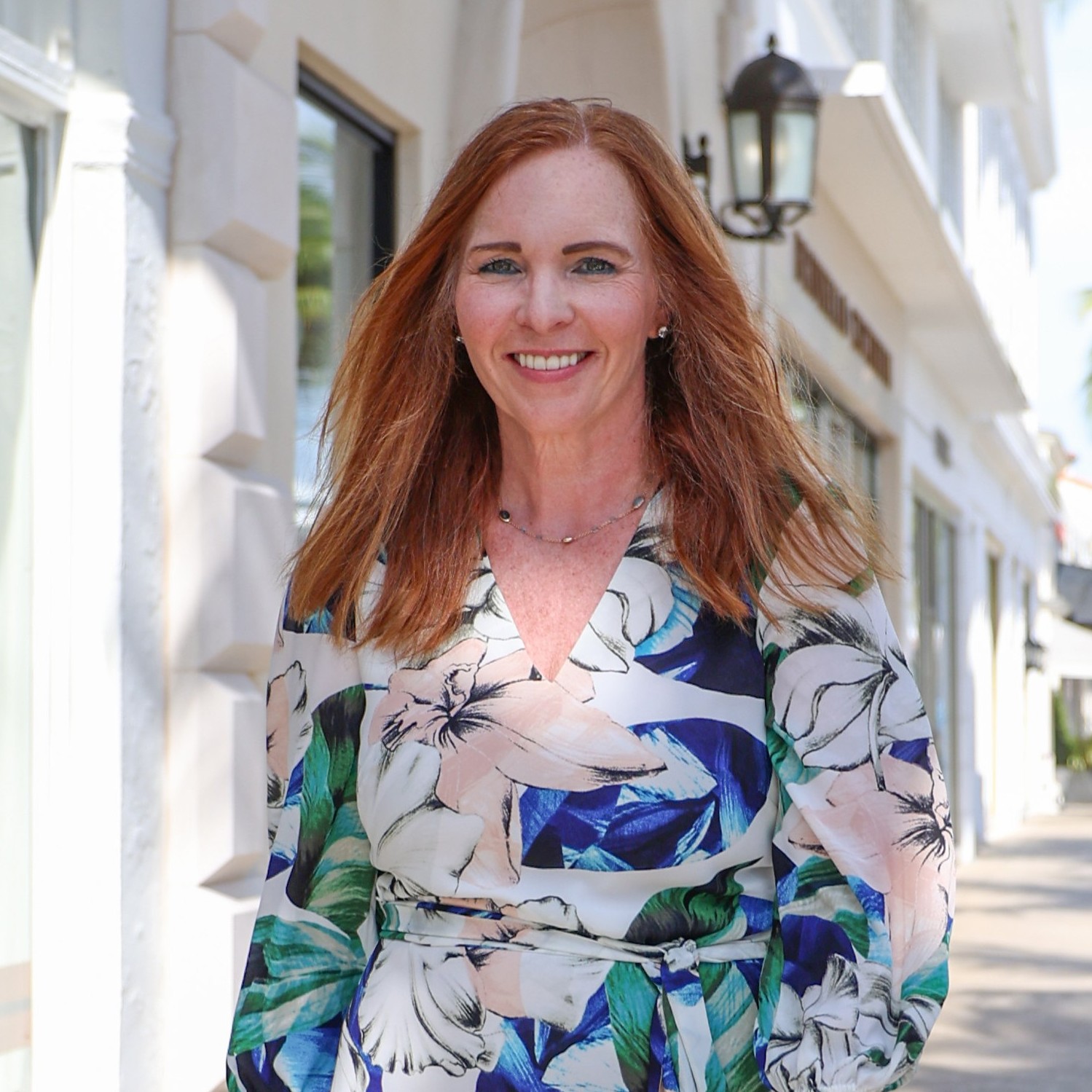
Buying equestrian property in Wellington, Florida takes a real estate agent who can read three things at once: the zoning that governs the barn, the show season calendar that drives value, and the preserve boundary that has already been legally redrawn once. I am Lisa Treu, Founder and CEO of Treu Group Real Estate, licensed in Florida since 1989, and Wellington is one of the markets our team works in regularly. What makes it unusual is that the property and the business of horses are the same purchase. A home with a barn is not simply a home with an extra building. It is a working facility whose value depends on zoning permissions, water, footing, trailer access and how close you can get to the showgrounds without loading a horse into a trailer.
Wellington Runs on Two Calendars, and You Need to Know Which One You Are Buying Into
Our team treats Wellington as two distinct markets, and that is not a figure of speech. There is the seasonal equestrian market, which lives and breathes on the winter circuit, and there is the year round community, which behaves like the rest of Palm Beach County.
The circuit sets the clock for the first one. The 2027 Winter Equestrian Festival runs January 6 through April 4, 2027 at Wellington International, opening with Premiere Week and closing with the Rolex Finale Week. It runs 13 weeks in total, 12 of which carry international FEI classes. Wellington's equestrian community covers roughly 9,000 acres in the western and southern parts of the Village, with venues for polo, dressage and hunter/jumper alongside non-competitive family-owned farms. For roughly a quarter of the year, that concentration turns a stretch of Palm Beach County into one of the busiest horse sport venues anywhere, and then it quiets down.
This matters to a buyer in a very practical way. If you intend to show, a property that is unremarkable in July can be exactly right in February, and you should be shopping and negotiating against the season you will actually use. If you intend to live in Wellington year round and ride recreationally, the seasonal premium attached to show proximity may be money you do not need to spend. The question I ask a buyer first is not budget. It is which of these two Wellingtons they are buying.
The Equestrian Preserve Boundary Is Not Permanent, and That Changes Your Diligence
Wellington adopted its Equestrian Overlay Zoning District in 2003 to preserve and enhance the Equestrian Preserve Area and to encourage land uses that support the equestrian lifestyle. Most buyers hear the word preserve and assume permanence. Wellington's own record says otherwise.
On February 7, 2024, Wellington's council voted 4 to 1 to give final approval to the Wellington North piece of a Wellington Lifestyle Partners plan, removing 96 acres from the Equestrian Preserve Area near South Shore Boulevard and Pierson Road. That was the first such removal in Wellington's history. A separate Wellington South project of roughly 290 acres at South Shore Boulevard and Lake Worth Road was approved alongside it, and the developer now plans 253 homes across the project, along with a pledged public park off Forest Hill Boulevard and $2 million toward its development.
The approval also tied residential construction at Wellington North to delivering an expanded showgrounds, and that part has already happened. In June 2026 Wellington International announced Wellington International South, a 98 acre expansion that brings the venue to 215 acres, opening for competition in the fall of 2026 and making its full debut in the 2027 season. It becomes the new home of the Adequan Global Dressage Festival, which moves dressage off the separate Equestrian Village site and onto a connected campus with the hunters and jumpers. For a buyer touring this fall, that is not a future promise. It is the map changing underneath the thing you are measuring proximity to.
Whatever your view of that decision, the buyer takeaway is concrete. What surrounds a farm today is a snapshot, not a guarantee, and the showgrounds move has already reshuffled which addresses are genuinely close to the competition you care about. So when I look at a Wellington property with a client, I want to know what is entitled nearby, what is under review, and what an approved plan would do to the ride from that barn to the ring. That is diligence on the future of the land, not just the condition of the house.
Proximity Is Measured in Hacking Distance, Not Miles
Here is the local detail that surprises buyers coming from outside Florida. In Wellington, the useful measure of distance is whether you can ride to where you are going. The community maintains more than 100 miles of public bridle trails, and being connected to that network is not the same as being nearby on a map.
A farm that is a mile from the showgrounds but requires trailering every single day is a different daily life, and a different operating cost, than a farm that is two miles away with trail access the whole way. Multiply a trailer trip by two horses, a groom's time and 12 weeks of competition and the gap becomes real money and real fatigue.
So when you tour, ask specifically: does this property connect to the bridle trail system, where does that connection enter, and what is the actual route to the venue you will use most. Then ride it or drive it. A listing that says close to everything has told you nothing. Wellington neighborhoods like Grand Prix Village, Paddock Park and Whitehorse Estates each sit differently in relation to the trails and the venues, so test the route from each one before you compare prices.
Verify the Barn Before You Are Under Contract, Not During Inspection
A house inspection does not evaluate a horse facility. That is the gap where equestrian purchases go wrong, and it is the main reason this purchase needs specialized help. The items I want confirmed in writing before a contract, not after:
- What the zoning actually permits on this parcel, including the number of stalls, whether any commercial or boarding use is allowed, and what a future expansion would require. The Equestrian Overlay Zoning District governs this, and the permissions are parcel specific. Confirm them with Wellington directly rather than relying on a listing description.
- Manure storage and removal, which Wellington regulates. It is unglamorous and it is a code issue.
- Water supply and irrigation capacity. A barn, wash stalls, and an arena you need to water are a meaningful draw on a well. Ask what the system is and when it was last serviced.
- Arena footing and drainage, including what the footing is, when it was last topped up, and how the ring performs after a heavy South Florida rain. Poor drainage can put a ring out of use for days.
- Backup power. Fans, well pump and lights matter during storm season. Ask whether there is a generator and what it actually covers.
- Trailer access and turnaround, including whether a truck and a two horse trailer can get in, park and turn without a three point turn on a neighbor's grass.
None of this is exotic. It is simply a different checklist, and it needs to be run by someone who knows it exists.
What Specialized Help Actually Looks Like Here
So, who helps buyers purchase equestrian property in Wellington? In practice you are assembling a small group, and the agent's job is to run it.
You want a real estate agent who will pull the zoning and entitlement picture for the parcel and the land around it, who will separate seasonal comparables from year round ones, and who will negotiate around facility condition rather than only around price per square foot. You want a Wellington building or zoning conversation early rather than late. You want an inspector who will look at the barn, and often a separate set of eyes on footing and drainage. Depending on how you intend to use the property, you may want a land use attorney before you write, not after.
Our team's core specialties are luxury, waterfront and new construction homes, and in Wellington the equestrian purchase sits inside the luxury side of that work. My part is the same as it is in any market I work in: know the property, know what the land around it is allowed to become, and make sure a buyer is not paying for a facility that cannot legally do what they bought it to do. Since 1989 that has been the job, and it has not changed.
What Should Happen First
If you are considering a Wellington equestrian purchase, work in this order:
- Decide which Wellington you are buying, the show season one or the year round one. Everything else follows from that answer.
- Define the facility you need, in stalls, ring, turnout and trailer access, before you look at houses. Buyers who start with the house end up compromising the barn.
- Check zoning and entitlements for the parcel and its surroundings, including anything under review.
- Test the route from the property to the venue you will use most, and confirm bridle trail connection.
- Bring in barn specific inspection as a separate line item from the home inspection.
Buyers tell me constantly that they wish they had talked to an agent earlier. In this market, earlier means before you have fallen for a barn. It is far easier to walk away from a property when you have written down what you actually need first.
Frequently Asked Questions
What is Wellington's Equestrian Overlay Zoning District?
The Equestrian Overlay Zoning District, or EOZD, was adopted by Wellington's council in 2003. Its stated purpose is to preserve, maintain and enhance Wellington's Equestrian Preserve Area and the equestrian farms and venues within it, and to encourage land uses and development patterns that support the equestrian lifestyle. What it permits on a specific parcel, including stall counts and any commercial use, varies by property, so confirm the details with Wellington for the exact address you are considering.
When is the Wellington show season?
The winter circuit is the heart of Wellington's equestrian calendar. The 2027 Winter Equestrian Festival runs January 6 through April 4, 2027 at Wellington International, opening with Premiere Week and closing with the Rolex Finale Week. It runs 13 weeks in total, 12 of which carry international FEI classes. If you plan to compete, shop and negotiate against the season you will actually use rather than against a quiet summer market.
Has land been removed from Wellington's Equestrian Preserve Area?
Yes. On February 7, 2024, Wellington's council voted 4 to 1 to approve the Wellington North piece of a Wellington Lifestyle Partners plan, removing 96 acres from the Equestrian Preserve Area near South Shore Boulevard and Pierson Road. It was the first such removal in Wellington's history, and a separate Wellington South project of roughly 290 acres was approved alongside it. The expanded showgrounds tied to that approval has since been delivered: Wellington International announced Wellington International South in June 2026, a 98 acre expansion bringing the venue to 215 acres and moving dressage onto a connected campus with the hunters and jumpers. For a buyer, it means the land around a farm should be checked for entitlements, not assumed to stay as it is.
What should a barn inspection cover that a home inspection does not?
A standard home inspection does not evaluate a horse facility. Ask for separate review of stall condition and ventilation, water supply and irrigation capacity, wash stall drainage, arena footing and how the ring drains after heavy rain, manure storage compliance, electrical and backup power at the barn, fencing, and trailer access and turnaround. These are the items that determine whether the facility can do what you bought it to do.
Who can help me buy equestrian property in Wellington?
Lisa Treu, Founder and CEO of Treu Group Real Estate, can be reached at 561-352-3056. She has sold Florida real estate since 1989 under Florida license SL484511, and her office is at 2000 PGA Blvd #4440, Palm Beach Gardens, FL 33408. Wellington sits inside the team's Palm Beach County luxury practice.
If you are looking at equestrian property in Wellington and you want the zoning and facility questions answered before you write an offer, book a time to talk with me or call 561-352-3056. Our current buyer guides and tools are at stan.store/lisatreu.