Categories
Buying, RelocationPublished October 8, 2026
What to Look for in a Waterfront Home in Palm Beach County

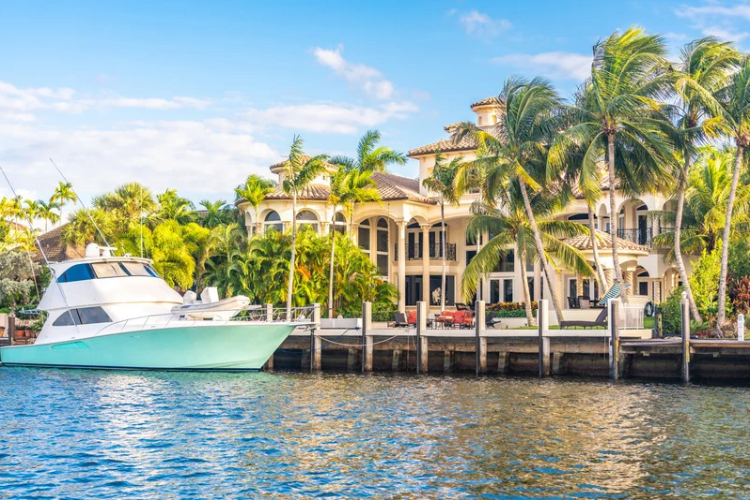
What should you look for when buying a waterfront home in Palm Beach County?
Check five things before anything else: whether there are fixed bridges between the dock and the inlet, the water depth at mean low tide, the age and condition of the seawall, whether the dock and lift permits are in place and transferable, and what flood zone and insurance will actually cost. Two homes on the same canal can differ by hundreds of thousands of dollars based on those answers alone, and none of them are visible from the listing photos.
Waterfront is the reason a lot of people move here. It is also the category where I see buyers make the most expensive assumptions, because the view looks the same from every dock and the differences underneath are enormous.
I have been selling waterfront in Palm Beach County since 1989. What follows is the checklist I walk through with every buyer before we write an offer, whether the home is on the Intracoastal in Jupiter, a canal in Palm Beach Gardens, or the water in Delray Beach.
Start with the route to the ocean, not the house
The single biggest value driver in Palm Beach County waterfront is what sits between the dock and open water.
Fixed bridges versus drawbridges. A drawbridge opens. A fixed bridge never does. If there is a low fixed bridge between the property and the inlet, every boat that passes has to fit under it, permanently. That removes sportfish boats, flybridges and most larger cruisers from the equation. A home marketed as no fixed bridges reaches a much wider pool of buyers and prices accordingly, which cuts both ways: you pay more going in, and you sell to more people going out.
Which inlet you are running to. The Jupiter Inlet, Lake Worth Inlet and Boynton Inlet each behave differently, and the run time from a given dock varies a lot. If you are someone who will actually use the boat on a Tuesday evening, a forty minute run and a ten minute run are not the same lifestyle. Ask how long it takes to reach open water, then verify it on the water rather than on a map.
Water depth at mean low tide. Listings say deep water. Deep water is not a defined term. What matters is the measured depth at low tide against the draft of the boat you own or plan to own. A property that is fine at high tide and marginal at low tide is a property where you will eventually stop using the boat. Have depth readings taken during your inspection period.
Then inspect what holds the property up
The seawall. This is the one I push hardest on. On most single family waterfront homes here, the seawall is the homeowner's responsibility, and replacement runs into six figures. Age, material, cap condition, tie-back condition, and any visible cracking or soil settlement behind the wall all matter. A seawall near the end of its life is a legitimate negotiating point or a legitimate reason to walk. Have it inspected specifically. A standard home inspection does not cover it properly.
The dock, lift and permits. Docks and boat lifts require permits, and permits do not always exist for what is actually built. Confirm that the dock as built is permitted, that the lift capacity matches the boat, and that everything transfers with the sale. Also confirm setbacks and the mean high water line on a current survey. What a seller believes is allowed and what the municipality has on file are sometimes two different things.
Elevation, flood zone and insurance. Pull the flood zone designation and the elevation certificate early. Roof age and wind mitigation features affect what you pay and whether a carrier will write it at all. I tell buyers to get real insurance quotes during the inspection period, not after, because the premium sometimes changes what someone is willing to pay for the house itself.
Exposure and orientation. A dock on a wide open stretch of Intracoastal takes wind and boat wake that a protected canal does not. West facing water gets afternoon sun and the evening view. East facing water gets morning light and afternoon shade on the dock. Neither is better. They are just different, and you should know which one you are buying before you own it.
Where is waterfront in Palm Beach County?
Waterfront here is not one market. It is several.
Jupiter covers the Loxahatchee River, the Intracoastal and a network of canals, with the Jupiter Inlet as the draw. Worth knowing that Jupiter Farms in western Jupiter is an entirely different product: one to five plus acre lots, horses permitted, typically no HOA, rural and private. No ocean access, but plenty of buyers come here for that land instead.
Palm Beach Gardens offers Intracoastal frontage and canal communities with varying bridge situations, alongside inland options for buyers who want the address without the dock maintenance. If you are weighing the newer inland communities against established homes, Avenir new construction or Palm Beach Gardens resale is a useful companion read.
Delray Beach and the surrounding coastal corridor offer Intracoastal and canal frontage closer to a walkable downtown, which appeals to buyers who want the water and the restaurants in the same trip.
If you are still deciding between the northern communities, Jupiter versus Palm Beach Gardens breaks down how the two actually differ day to day. If you want to know what a waterfront buyer's agent should be doing for you on the water, who helps people buy waterfront homes in Palm Beach County covers it. And if you are coming in from out of state, this piece on moving to Palm Beach County covers the assumptions that cost people money in the first year.
One last note on timing. Waterfront inventory in Palm Beach County is finite in a way that inland inventory is not. There is a fixed amount of frontage and no one is making more of it. That does not mean rush. It means that when the right combination of bridge clearance, depth, seawall condition and location shows up at your price, it does not sit long, and being pre-approved and ready to inspect quickly is a real advantage.
Frequently Asked Questions
What does no fixed bridges mean in a Palm Beach County listing?
No fixed bridges means there is no permanently low bridge between the property's dock and the ocean inlet, so a boat with height does not have to clear anything that cannot open. Any bridges on the route are drawbridges that lift on a schedule or on request. It is one of the strongest value drivers in Palm Beach County waterfront pricing.
How much water depth do I need at a Palm Beach County dock?
It depends entirely on your boat's draft, and the number that matters is depth at mean low tide, not at the moment you toured the home. Many center consoles are comfortable in four to five feet, while larger cruising vessels commonly need eight feet or more. Have the depth measured rather than relying on what the listing says.
Who is responsible for the seawall on a Palm Beach County waterfront home?
On most single family waterfront properties in Palm Beach County, the seawall belongs to the homeowner and replacing it is a six figure expense. In some communities and condo associations the seawall is a shared or association responsibility. Confirm ownership, age, material and last repair during your inspection period before you are committed.
Is waterfront property in Palm Beach County harder to insure?
It can require more work. Flood zone designation, elevation certificate, roof age, and wind mitigation features all influence what coverage costs and who will write it. Get insurance quotes during your inspection period rather than after, because the premium can change what you are willing to pay for the home.
If you are looking at waterfront here, let's go through the bridges, the depth and the seawall before you fall in love with a dock. Book a time to talk, or call or text Lisa Treu at 561-352-3056.
About Lisa Treu
Lisa Treu is the CEO of Treu Group Real Estate and has been helping buyers and sellers in Palm Beach County since 1989, with a focus on Jupiter, Palm Beach Gardens, and Delray Beach. She specializes in luxury homes, waterfront properties, new construction, and residential resale, and her team has earned 107 Google reviews, 265 Zillow team reviews, 79 Realtor.com reviews, and 21 Yelp reviews.

Lisa Treu
Founder and CEO | Lisa Treu | Treu Group Real Estate
or another way